Blue Team Fundamentals: Security Operations and Analysis Training Course
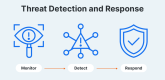
The Blue Team is tasked with safeguarding an organization's networks, systems, and data against cyber threats. Its primary objective is to monitor, detect, and respond to security incidents by leveraging various tools and strategies to fortify cybersecurity defenses.
This course emphasizes the defensive side of cybersecurity, covering security operations, threat detection, incident response, and log analysis. Participants will acquire practical experience with essential tools and techniques employed to counter cyber threats.
This instructor-led, live training (available online or onsite) is designed for intermediate-level IT security professionals aiming to enhance their skills in security monitoring, analysis, and response.
Upon completing this training, participants will be able to:
- Grasp the role of the Blue Team in cybersecurity operations.
- Leverage SIEM tools for security monitoring and log analysis.
- Identify, analyze, and respond to security incidents.
- Conduct network traffic analysis and gather threat intelligence.
- Implement best practices within Security Operations Center (SOC) workflows.
Course Format
- Interactive lectures and discussions.
- Extensive exercises and practical drills.
- Hands-on implementation in a live-lab environment.
Course Customization Options
- To arrange customized training for this course, please contact us.
Course Outline
Introduction to Blue Team Operations
- Overview of the Blue Team and its role in cybersecurity
- Understanding attack surfaces and threat landscapes
- Introduction to security frameworks (MITRE ATT&CK, NIST, CIS)
Security Information and Event Management (SIEM)
- Introduction to SIEM and log management
- Setting up and configuring SIEM tools
- Analyzing security logs and detecting anomalies
Network Traffic Analysis
- Understanding network traffic and packet analysis
- Using Wireshark for packet inspection
- Detecting network intrusions and suspicious activity
Threat Intelligence and Indicators of Compromise (IoCs)
- Introduction to threat intelligence
- Identifying and analyzing IoCs
- Threat hunting techniques and best practices
Incident Detection and Response
- Incident response lifecycle and frameworks
- Analyzing security incidents and containment strategies
- Forensic investigation and malware analysis fundamentals
Security Operations Center (SOC) and Best Practices
- Understanding SOC structure and workflows
- Automating security operations with scripts and playbooks
- Blue Team collaboration with Red Team and Purple Team exercises
Summary and Next Steps
Requirements
- Basic understanding of cybersecurity concepts
- Familiarity with networking fundamentals (TCP/IP, firewalls, IDS/IPS)
- Experience with Linux and Windows operating systems
Audience
- Security analysts
- IT administrators
- Cybersecurity professionals
- Network defenders
Open Training Courses require 5+ participants.
Blue Team Fundamentals: Security Operations and Analysis Training Course - Booking
Blue Team Fundamentals: Security Operations and Analysis Training Course - Enquiry
Blue Team Fundamentals: Security Operations and Analysis - Consultancy Enquiry
Testimonials (2)
Clarity and pace of explanations
Federica Galeazzi - Aethra Telecomunications SRL
Course - AI-Powered Cybersecurity: Advanced Threat Detection & Response
It did give me the insight what I needed :) I am starting teaching on a BTEC Level 3 qualification and wanted to widen my knowledge in this area.
Otilia Pasareti - Merthyr College
Course - Fundamentals of Corporate Cyber Warfare
Upcoming Courses
Related Courses
AI-Powered Cybersecurity: Threat Detection & Response
21 HoursThis instructor-led, live training in Turkey (online or onsite) is designed for cybersecurity professionals at the beginner level who aim to learn how to use AI to improve threat detection and response capabilities.
Upon completing this training, participants will be able to:
- Comprehend the role of AI in cybersecurity.
- Deploy AI algorithms for the purpose of threat detection.
- Utilize AI tools to automate incident response procedures.
- Incorporate AI into current cybersecurity frameworks.
AI-Powered Cybersecurity: Advanced Threat Detection & Response
28 HoursThis instructor-led, live training in Turkey (online or onsite) targets intermediate to advanced cybersecurity professionals seeking to enhance their skills in AI-driven threat detection and incident response.
By the end of this training, participants will be able to:
- Implement advanced AI algorithms for real-time threat detection.
- Customize AI models for specific cybersecurity challenges.
- Develop automation workflows for threat response.
- Secure AI-driven security tools against adversarial attacks.
Bug Bounty Hunting
21 HoursBug Bounty Hunting involves systematically identifying security vulnerabilities in software, websites, or systems and responsibly reporting them to earn rewards or professional recognition.
This instructor-led live training (available online or onsite) is designed for beginner-level security researchers, developers, and IT professionals eager to grasp the fundamentals of ethical bug hunting and learn how to effectively participate in bug bounty programs.
Upon completion of this training, participants will be able to:
- Grasp the core concepts of vulnerability discovery and the mechanics of bug bounty programs.
- Utilize essential tools such as Burp Suite and browser developer tools for application testing.
- Identify prevalent web security flaws, including XSS, SQLi, and CSRF.
- Submit clear, actionable vulnerability reports to bug bounty platforms.
Course Format
- Interactive lectures and discussions.
- Hands-on practice with bug bounty tools in simulated testing environments.
- Guided exercises focused on discovering, exploiting, and reporting vulnerabilities.
Customization Options
- To request customized training tailored to your organization's applications or specific testing requirements, please contact us to arrange.
Bug Bounty: Advanced Techniques and Automation
21 HoursBug Bounty: Advanced Techniques and Automation delves into high-impact vulnerabilities, automation frameworks, reconnaissance techniques, and the tooling strategies employed by top-tier bug bounty hunters.
This instructor-led, live training (available online or onsite) is designed for intermediate to advanced security researchers, penetration testers, and bug bounty hunters who aim to streamline their workflows, scale reconnaissance efforts, and uncover complex vulnerabilities across multiple targets.
Upon completion of this training, participants will be able to:
- Automate reconnaissance and scanning processes for multiple targets.
- Utilize state-of-the-art tools and scripts for bounty automation.
- Identify complex, logic-based vulnerabilities that fall outside standard scanning methods.
- Develop custom workflows for subdomain enumeration, fuzzing, and reporting.
Course Format
- Interactive lectures and discussions.
- Practical application of advanced tools and scripting for automation.
- Guided labs focusing on real-world bounty workflows and advanced attack chains.
Customization Options
- To arrange a customized training session tailored to your bounty targets, automation requirements, or internal security challenges, please contact us.
Cyber Defence (SOC) Analyst Foundation
7 HoursThis instructor-led, live training in Turkey (online or on-site) targets beginner to intermediate-level security analysts and system administrators aiming to build a foundational understanding of Cyber Defence (SOC) analysis.
By the end of this training, participants will be able to:
- Understand the principles of Security Management in a Cyber Defence context.
- Execute effective Incident Response strategies to mitigate security incidents.
- Implement Security Education practices to enhance organizational awareness and preparedness.
- Manage and analyze Security Information for proactive threat identification.
- Utilize Event Management techniques to monitor and respond to security events.
- Implement Vulnerability Management processes to identify and address system vulnerabilities.
- Develop skills in Threat Detection to identify and respond to potential cyber threats.
- Participate in Simulated Attacks to test and improve incident response capabilities.
CHFI - Certified Digital Forensics Examiner
35 HoursThe vendor-neutral Certified Digital Forensics Examiner certification is designed to equip Cyber Crime and Fraud Investigators with skills in electronic discovery and advanced investigative techniques. This course is indispensable for professionals who encounter digital evidence during investigations.
The Certified Digital Forensics Examiner training provides the methodology for conducting computer forensic examinations. Students will learn to apply forensically sound investigative techniques to evaluate the scene, collect and document relevant information, interview key personnel, maintain the chain of custody, and draft findings reports.
The Certified Digital Forensics Examiner course is beneficial for organizations, individuals, government bodies, and law enforcement agencies seeking to pursue litigation, establish proof of guilt, or implement corrective actions based on digital evidence.
Certified Incident Handler
21 HoursThe Certified Incident Handler program offers a systematic framework for effectively and efficiently managing cybersecurity incidents.
This instructor-led live training, available online or onsite, targets intermediate IT security professionals seeking to build tactical expertise in planning, classifying, containing, and managing security incidents.
Upon completion, participants will be equipped to:
- Comprehend the incident response lifecycle and its distinct phases.
- Perform incident detection, classification, and notification procedures.
- Implement effective containment, eradication, and recovery strategies.
- Create post-incident reports and continuous improvement plans.
Course Format
- Interactive lectures and discussions.
- Practical application of incident handling procedures within simulated scenarios.
- Guided exercises emphasizing detection, containment, and response workflows.
Customization Options
- For customized training tailored to your organization's specific incident response procedures or tools, please contact us to arrange.
Mastering Continuous Threat Exposure Management (CTEM)
28 HoursThis instructor-led, live training in Turkey (online or onsite) targets intermediate-level cybersecurity professionals seeking to implement CTEM in their organizations.
By the end of this training, participants will be able to:
- Understand the principles and stages of CTEM.
- Identify and prioritize risks using CTEM methodologies.
- Integrate CTEM practices into existing security protocols.
- Utilize tools and technologies for continuous threat management.
- Develop strategies to validate and improve security measures continuously.
Cyber Emergency Response Team (CERT)
7 HoursThis course explores the management of an incident response team. Given the frequency and complexity of modern cyber attacks, the effectiveness of first responders makes incident response a critical organizational function.
As the final line of defense, incident response demands robust management processes for timely detection and efficient action. Leading an incident response team specifically requires specialized skills and deep knowledge.
Cyber Threat Intelligence
35 HoursThis instructor-led, live training in Turkey (online or onsite) is designed for advanced cybersecurity professionals who aim to understand Cyber Threat Intelligence and develop the skills to effectively manage and mitigate cyber threats.
By the end of this training, participants will be able to:
- Understand the fundamentals of Cyber Threat Intelligence (CTI).
- Analyze the current cyber threat landscape.
- Collect and process intelligence data.
- Perform advanced threat analysis.
- Leverage Threat Intelligence Platforms (TIPs) and automate threat intelligence processes.
Fundamentals of Corporate Cyber Warfare
14 HoursThis instructor-led, live training in Turkey (online or onsite) explores various facets of enterprise security, from AI to database protection. It also covers the latest tools, processes, and mindset needed to protect from attacks.
DeepSeek for Cybersecurity and Threat Detection
14 HoursThis instructor-led, live training, accessible via online or on-site formats, is designed for intermediate-level cybersecurity professionals looking to utilize DeepSeek for advanced threat detection and automation.
By the conclusion of this training, participants will be able to:
- Leverage DeepSeek AI for real-time threat detection and analysis.
- Implement AI-driven anomaly detection techniques.
- Automate security monitoring and response using DeepSeek.
- Integrate DeepSeek into existing cybersecurity frameworks.
Digital Investigations - Advanced
21 HoursIn this course, you will master the principles and techniques of digital forensics investigation, along with the range of available computer forensics tools. You will gain knowledge of core forensics procedures to ensure that evidence is admissible in court, as well as the associated legal and ethical considerations.
You will learn how to conduct forensic investigations on both Unix/Linux and Windows systems across various file systems. The curriculum covers advanced topics such as wireless, network, web, database, and mobile crime investigation.
Ethical Hacker
35 HoursThis course immerses participants in an interactive learning environment, demonstrating how to scan, test, exploit, and secure their own systems. Through a lab-intensive approach, each student gains in-depth knowledge and practical experience with essential security systems. Students begin by understanding perimeter defenses, then proceed to scan and attack their own networks in a safe environment. The curriculum covers how intruders escalate privileges and the steps required to secure systems. Additionally, students learn about intrusion detection, policy creation, social engineering, DDoS attacks, buffer overflows, and virus creation. Upon completion of this intensive five-day class, students will possess hands-on understanding and experience in ethical hacking.
The Ethical Hacking Training aims to:
- Establish and govern minimum standards for certifying professional information security specialists in ethical hacking measures.
- Inform the public that credentialed individuals meet or exceed these minimum standards.
- Reinforce ethical hacking as a unique, self-regulating profession.
Audience:
This course is ideal for professionals in roles such as, but not limited to:
- Security Engineers
- Security Consultants
- Security Managers
- IT Directors/Managers
- Security Auditors
- IT Systems Administrators
- IT Network Administrators
- Network Architects
- Developers
MasterClass Certified Ethical Hacker Program
28 HoursThe Certified Ethical Hacker certification is a highly regarded cybersecurity credential globally.
This program combines theoretical instruction with practical exercises to prepare students for both the CEH certification exam and the CEH Practical Exam. Candidates who successfully pass both exams are awarded the CEH Master credential along with their CEH certification.
Students have the option to include either the CPENT or the CHFI course in their package.
Training for either the Certified Penetration Testing Professional (CPENT) course or the Computer Hacking Forensic Investigator (CHFI) course is delivered to each student via EC-Council’s online, self-paced, streaming video program.
CPENT (Pen-test):
Instructs students on how to apply the concepts and tools learned in the CEH program within a penetration testing methodology in a live cyber range.
CHFI (Computer Forensics):
Teaches students a systematic approach to computer forensics, covering searching and seizing, chain-of-custody procedures, acquisition, preservation, analysis, and reporting of digital evidence.
Course Description
CEH provides an in-depth understanding of ethical hacking phases, various attack vectors, and preventative countermeasures. It teaches you how hackers think and operate maliciously, enabling you to better design your security infrastructure and defend against future attacks. Understanding system weaknesses and vulnerabilities helps organizations strengthen their security controls to minimize the risk of incidents.
CEH was designed to incorporate a hands-on environment and a systematic process across each ethical hacking domain and methodology, giving you the opportunity to demonstrate the knowledge and skills required to achieve the CEH credential. You will be exposed to a completely different perspective on the responsibilities and measures required to maintain security.
Who Should Attend
- Law enforcement personnel
- System administrators
- Security officers
- Defense and military personnel
- Legal professionals
- Bankers
- Security professionals
About the Certified Ethical Hacker Master
To earn the CEH Master certification, you must pass the CEH Practical exam. The CEH Practical Exam is designed to allow students to prove they can execute the principles taught in the CEH course. The practical exam requires you to demonstrate the application of ethical hacking techniques such as threat vector identification, network scanning, OS detection, vulnerability analysis, system hacking, and more.
The CEH Practical exam does not contain simulations. Instead, you will be attacking a live range designed to mimic a corporate network through the use of live virtual machines, networks, and applications.
Successfully completing the challenges found in the CEH Practical Exam is the next step after attaining the Certified Ethical Hacker (CEH) certification. Successfully passing both the CEH exam and the CEH Practical will earn you the additional certification of CEH Master.
About the Certified Ethical Hacker Practical
To prove that you are skilled in ethical hacking, we test your abilities with real-world challenges in a real-world environment, using labs and tools that require you to complete specific ethical hacking challenges within a time limit, just as you would face in the real world.
The EC-Council CEH (Practical) exam is comprised of a complex network that replicates a large organization’s real-life network and consists of various network systems (including DMZ, Firewalls, etc.). You must apply your ethical hacking skills to discover and exploit real-time vulnerabilities while also auditing the systems.
About CPENT
EC-Council’s Certified Penetration Tester (CPENT) program focuses entirely on penetration testing and will teach you to perform in an enterprise network environment that must be attacked, exploited, evaded, and defended. If you have only been working in flat networks, CPENT’s live practice range will teach you to take your skills to the next level by teaching you to pen test IoT systems, OT systems, as well as how to write your own exploits, build your own tools, conduct advanced binary exploitation, double pivot to access hidden networks, and customize scripts and exploits to reach the innermost segments of the network.
About CHFI
The Computer Hacking Forensic Investigator (CHFI) course delivers the security discipline of digital forensics from a vendor-neutral perspective. CHFI is a comprehensive course covering major forensic investigation scenarios and enabling students to acquire necessary hands-on experience with various forensic investigation techniques and standard forensic tools necessary to successfully carry out a computer forensic investigation.